P@ch$nk0
P@ch$nk0
Duration: 13 min
Instrumentation: Violin, Fixed Electronics
Year: 2026
Performer: Arlan Vries
Videographer: Fish Yu
Work on this piece began by thinking about sound in gaming. As a lifelong gamer, I noticed my pulse quickening when hearing a certain ominous boss cue, and my seretonin levels boosting when hearing that new high score record chime followed by a ‘success jingle’. Or even that nostalgic pang I felt when I heard that old level up sound from a game from my childhood. I know all of this is not random, as humans, we’re extremely sensitive to sound, and gaming companies know it. Try playing your favourite game with the sound off, and you’ll see immediately how essential sound is in grounding the player in a virtual world, and adding greatly to their enjoyment of the game, and how the game feels to play.
When thinking about how these sounds play on our minds in various ways, you can deduce some common themes and connections between various musical devices and their impact on our brain and how that ties into broader game logic. For most games, at the heart of their game design is a win or lose condition. For decades composers paired sounds associated with a win that included rising intervals - particularly perfect 4ths or 5ths, fast rhythmical material, and sounds the timbrally have a harmonious and even spectral profile. Sounds associated with losing, tend to mirror the win sounds by using descending intervallic material, slowing down the harmonic and melodic rhythms, and timbrally including a more distorted spectral profile with white/pink noise often being used alongside pitch bending and drifting techniques.
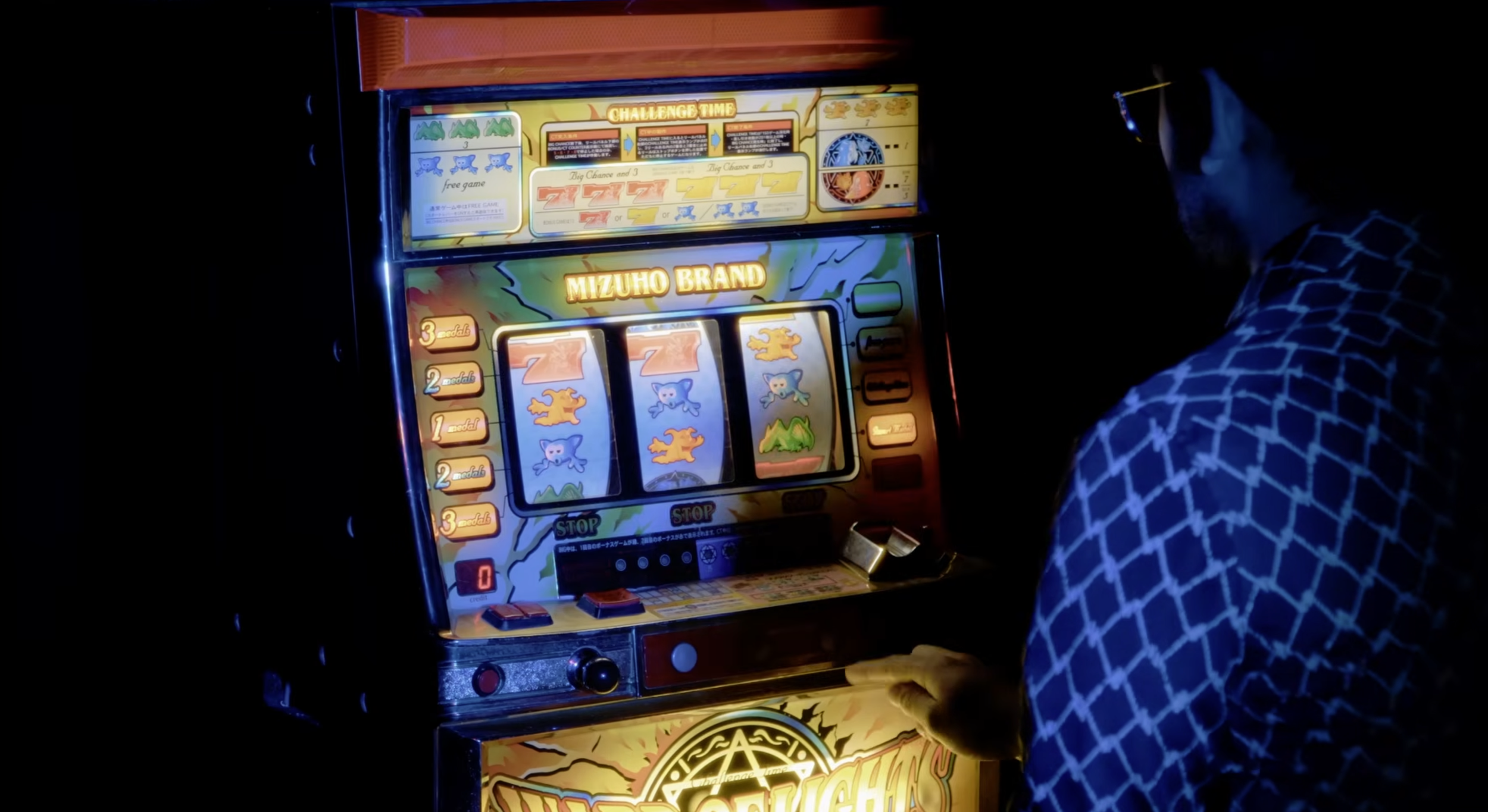
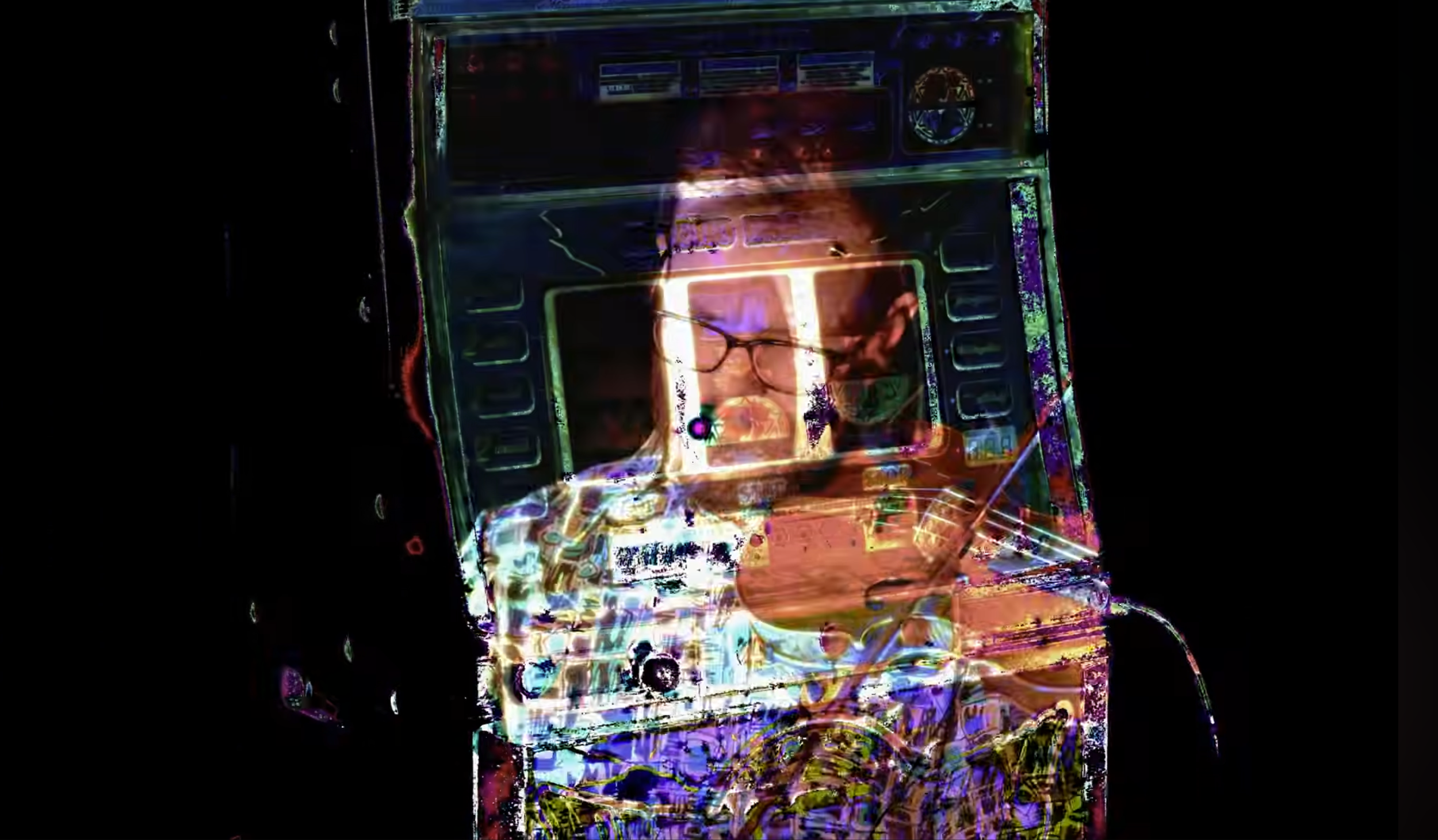
P@ch$nk0 is the distillation of these observations into a composition that samples an early 1990s Pachislo slot machine from Japan and layers these sounds with the ‘musical manifestaion’ of that machine personified by the violin player. The piece is structured around 3 audience members who will take turns playing when instructed to do so by ‘the machine’. With each player, there is a chance they may both win or lose. The piece adapts accordingly, travelling in different directions dynamically in response. Do you think your fellow audience member has what it takes to win, or lose?